

Pompeii vs Herculaneum | Everything you need to know
As locals, we have been to both ancient sites many times, and it’s now time to give our personal opinion about the ruins of Pompeii and Herculaneum, helping you to make the right choice on which visit. Of course, Herculaneum vs Pompeii is mostly about your preferences, but there are some objective factors to evaluate.
Pompeii and Herculaneum are two ancient Roman cities that were destroyed by the eruption of Mount Vesuvius in AD 79. Located not far from Naples, both are easy to reach by public transport. These cities offer a unique perspective of life in a different era, allowing you to roam around open-air museums that offer a glimpse into the life of ancient Romans.
While both cities share similar histories, some significant differences can make it challenging for visitors to choose which one to visit. In this article, we will compare Pompeii and Herculaneum and help you decide which one to include in your itinerary.
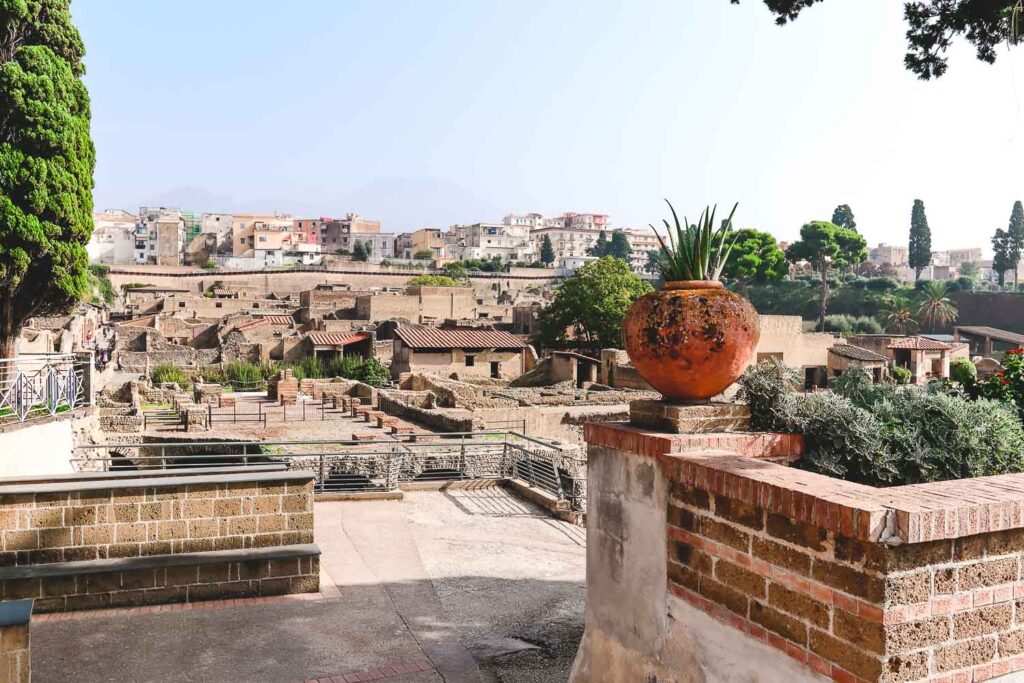
Pompeii Vs Herculaneum | Our detailed Comparison
Things to know about Pompeii
Looking to give you the most detailed guide about Pompeii vs Herculaneum, you should know some differences, which are mainly about the findings, size and alleyways of the two sites. Pompeii is a city that was buried under volcanic ash and pumice after the eruption of Mount Vesuvius.
Visiting Pompeii, you can walk around the city that was rediscovered in the 18th century and has since become one of the most popular tourist attractions in Italy and the world. The ruins of Pompeii cover an area of 170 acres, but experts estimate that only a third of the city has been excavated.
Of this one-third, just a portion is safe to explore and so open to the public. But still, as it is an open-air museum, it is subject to atmospheric factors that are endangering the structures. As a result, it might be a different site than you visited a few years ago.
Things to know about Herculaneum
Herculaneum is a lesser-known archaeological site, closer to Naples but still far from the well-known Pompeii.
Compared to Pompeii, Herculaneum is on the foothill of Vesuvius, so the volcano’s fury directly destroyed it. Because of its position, this city was also destroyed by the eruption of Mount Vesuvius, but it was buried under a layer of mud and ash rather than volcanic rock.
It is not all bad, as the ashes and debris preserved many of the buildings and artefacts in excellent condition, making Herculaneum an even more fascinating site to visit than Pompeii.
Where are Pompeii and Herculaneum
Pompeii and Herculaneum sites are located in Campania, a Southern Region of Italy near Naples, mid-way to the Amalfi Coast. In fact, Pompeii is 14 miles south of Naples, while the Herculaneum site is just 8 miles away from the Region’s Capital.
Herculaneum has better preserved ruins, but Pompeii is larger
We loved to get around Herculaneum because the site offers a unique view of the life of Romans in this area. Compared to Pompeii, Herculaneum buildings are better preserved, as per ages were under layers and layers of ashes, mud and solidified lava. You can clearly see the architectural composition of the houses with second floors, gardens, terraces and where the sea was once upon a time.
On the other hand, in Pompeii, you will have more of the daily life, with thermal baths, amphitheatre and agora in good condition, something that you still need to get in Herculaneum, or I mean not yet. As the excavation area in Herculaneum is constantly expanding, and the site is growing fast, in Pompeii, it goes slowly and mainly on the already known area.
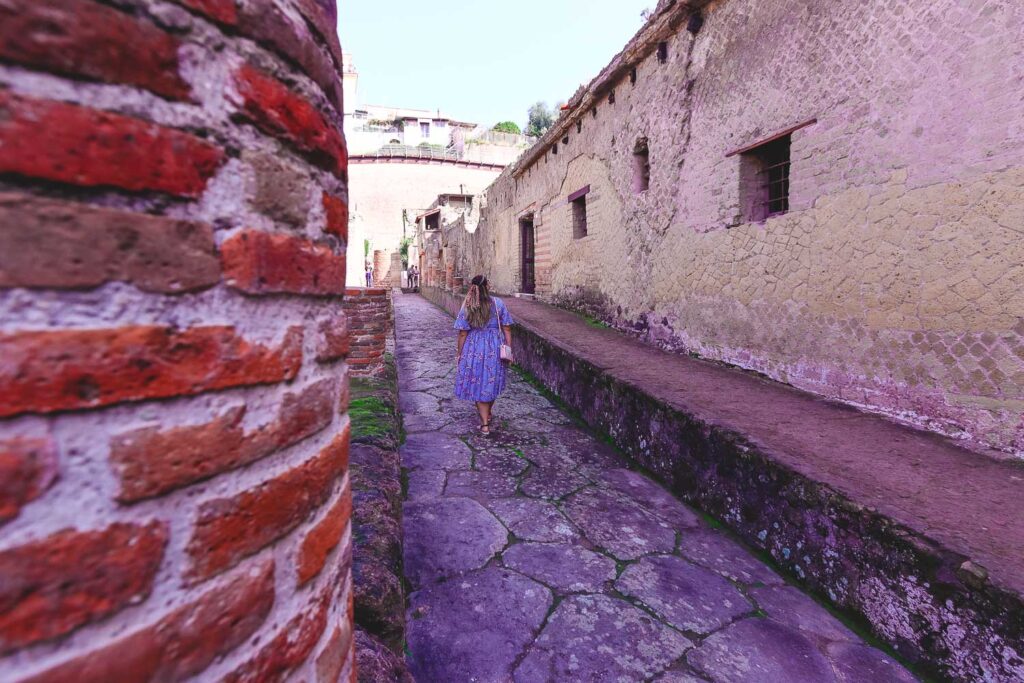
Pompeii and Herculaneum are Unesco World Heritage Sites
Pompeii and Herculaneum are both UNESCO World Heritage Sites recognised for their immense historical and cultural significance. As two of the best-preserved ancient Roman cities, they both attract millions of visitors yearly.
Pompeii is the most popular of the two, attracting over 2.5 million visitors annually, making it one of the most visited archaeological sites in the world. On the other hand, Herculaneum is a smaller and less crowded site, although it attracts around 300,000 visitors annually and is constantly growing in recent years.
Despite the big difference in visitor numbers, both sites offer an unparalleled opportunity to step back in time and explore the ancient world of the Roman Empire.
Best time to visit Pompeii and Herculaneum
Pompeii is overcrowded, and many authorities are often calling for a reduction in the number of visits to avoid destroying part of the remains. The best time to visit Pompeii is during the shoulder season, which is from April to May or September to October. During both times, the weather is still lovely but not scorching, and the crowds are smaller.
However, if you’re looking for a less crowded experience, avoid visiting Pompeii during the peak season, from June to August. The crowds and the climate can play a big game in choosing the best time to visit Pompeii. In fact, July and August are typically sweltering in southern Italy, making your visit to the ruins unpleasant.
The two sites are just 5 miles apart, so like Pompeii, the best time to visit Herculaneum is during the shoulder season. However, since Herculaneum receives fewer visitors than Pompeii, it’s generally less crowded throughout the year. Therefore, you can roam around the ruins and get some shade from time to time. Also, consider that Herculaneum has many houses still with roofs that can offer you shades to recover.

Things to see Herculaneum vs Pompeii
10 Things to see in Pompeii
10 Things to see in Herculaneum
Pompei vs Herculaneum how to get there
Pompeii is easily accessible by train from Naples or Sorrento. You can take the local train (Vesuviana) from Naples to Pompei Scavi-Villa dei Misteri station, the closest station to the archaeological site. Alternatively, you can take a bus from Naples to Pompeii, but it can take longer, especially visiting Naples in Summer. Once you arrive in Pompeii villa dei Misteri, follow the signs that will take you to the site entrance.
Herculaneum is also easily accessible by train from Naples or Sorrento. The same train that takes you to Pompeii, the Vesuviana, departs from Napoli Garibaldi, the central train station, and takes you to Ercolano Scavi. Mind that two stations stop at Ercolano; you must stop at the first one. Once the train arrives in Portici – Via Liberta’, stand up and wait for the next station. From Naples to Herculaneum is only 14 minutes train. While for Pompeii, it is about 30 minutes. You can buy the train tickets at the station’s entrance in Vesuviana. The tickets cost about €1,80 for Ercolano and €2,40 for Pompeii.
How to get around Pompeii vs Herculaneum
How to get around Pompeii
Pompeii is a large site, and it’s impossible to see everything in one day. The best way to explore the ruins is on foot. However, the hot weather, humidity and discontinued path make it difficult to walk. It is best to spend a long time if you have mobility problems and not wear heels to see the site.
How to get around Herculaneum
Herculaneum is a smaller site than Pompeii, and it’s possible to see everything in about half-day. You can roam around the ruins on foot, and there is no other way to get around. Like for Pompeii, we suggest not wearing heels, and if you have mobility problems, get around slowly. The Herculaneum site is not flat, so you will get up and down from stairs to irregular paths.

How long spend roaming around the roman ruins of Pompeii and Herculaneum
How long to spend in Pompeii
To see all of the major attractions in Pompeii, you should plan to spend an entire day at the site. However, you can see the highlights in a half-day tour if you need more time. We suggest booking this tour in advance.
How long to spend in Herculaneum
As said many times, Herculaneum is a smaller site, and the excavations are not yet there as Pompeii. However, you can still spend hours roaming around the sightseeing, stopping by the houses to admire the well-preserved majolicas, arguing about the original colours on the walls, and still seeing Herculaneum in half-day tops.
If you are interested in archaeology, you can hire a guide to take you around Herculaneum and give the right explanations. There are many myths and legends about Herculaneum, starting from the fact that it was founded to homage Hercules as a semi-god. BOOK YOUR HERCULANEUM GUIDE HERE.

Tickets Pompeii Vs Herculaneum
The entrance fee for Pompeii is €16 per person, while the entrance fee for Herculaneum is €13 per person. However, several discounts are available for students, seniors, and families. Additionally, both sites offer guided tours and audio guides for an additional fee.
Every first Sunday of the month, both Herculaneum and Pompeii are open to the public for free. Also, in May, both sites are part of “Maggio dei Monumenti”, which opens the door to the public for free. Some of the most important landmarks in Italy are open for visitors for free.
Skip the line tickets to Pompeii
If you need more time and want to visit Pompeii, booking a ticket in advance is better. When you visit Pompeii ruins, you must queue two times, the first is to get the ticket, and the second is for the entrance with security checks as well. If you are visiting in summer, this means that the lines are long and under the hot sun. Better to book the ticket in advance with skip the line feature so that you will get inside quicker.
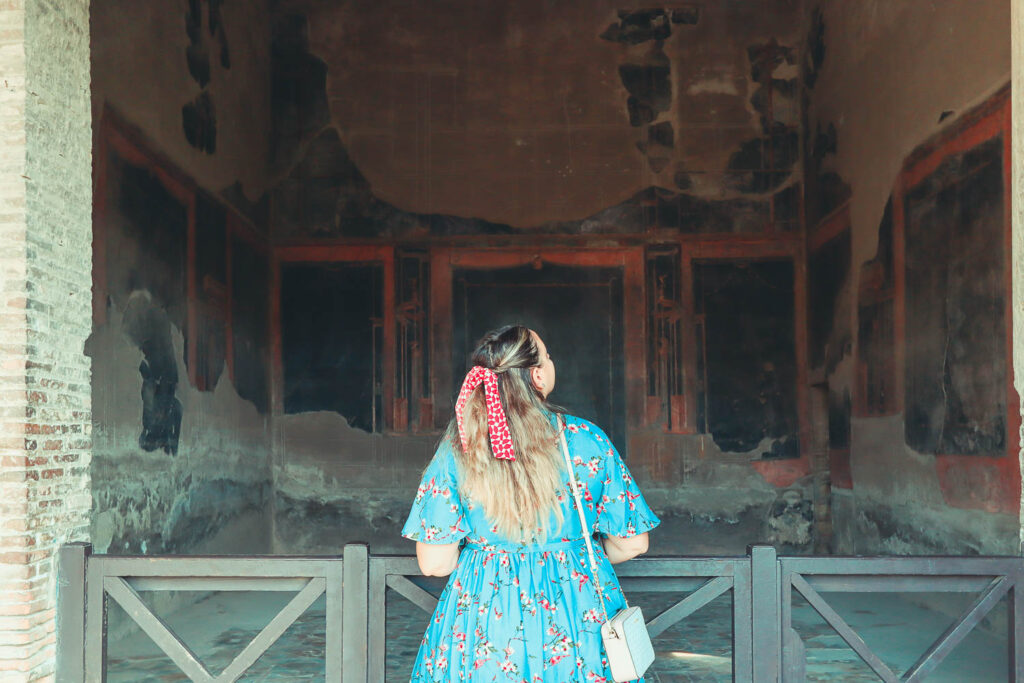
Skip the line tickets to Herculaneum with audio guide
Same as in Pompeii, you must queue two times in Herculaneum, once to get the ticket and another to get inside. Even though the lines are quite fast and smaller, getting the ticket before your entrance is better. Having a skip-the-line ticket makes your journey easier. If you plan to hike Vesuvius or visit Pompeii on the same day, it is better to have the tickets ready.
Book your tickets now!
Best tours in Pompeii
TOUR POMPEII WITH AN ARCHAEOLOGIST | Get around Pompeii with a passionate archaeologist and discover the secret of the ancient city covered by the ashes of Vesuvius. BOOK YOUR TOUR HERE.
GET AN AUDIO GUIDE IN POMPEII | If you would like to get around on your own but still learning about the different areas of Pompeii, book the entrance with a fast lane and an audio guide. BOOK IT NOW!
BOOK YOUR POMPEII TOUR IN ADVANCE | Pompeii guides are overwhelmed with requests. We suggest booking your tour in advance with a local guide, which might include transport from Naples or Sorrento. CHECK THESE POMPEII TOUR OPTIONS.
Best tours in Herculaneum
DAY TRIP FROM NAPLES TO HERCULANEUM RUINS AND MOUNT VESUVIUS | Herculaneum and Vesuvius in one day? Hell yeah! By booking your tour here in advance, you can benefit from cheaper prices and priority entrance to the sites. BOOK YOUR TOUR NOW!
PRIVATE WALKING TOUR OF HERCULANEUM WITH GUIDE | The Archeological Park of Herculaneum is fantastic and better preserved than Pompeii. Here you can learn about the daily life of Romans in the city. BOOK A LOCAL GUIDE TO SHOW YOU ALL THE SECRETS OF HERCULANEUM.
POMPEII, HERCULANEUM AND VESUVIUS ONE DAY TOUR | It might be tough to do the three sites in one day on your own, but definitely possible to go on a full-day tour of Pompeii, Herculaneum and Mount Vesuvius. Even looking at cost-effective trips, this tour from Naples is a bargain. CHECK THE AVAILABILITY FOR A FULL DAY TOUR FROM NAPLES.
Pompeii and Mount Vesuvius in one day from Naples
If you want to have the best experience, we suggest booking a combo of Pompeii and Mount Vesuvius. Hiking Vesuvius, you can see a volcano in total activity underneath, and then in half an hour, be roaming around the ruins of Pompeii. Check out this tour, which will give you everything from transport to guide to two of the most impressive places to visit near Naples.
Book a tour of Pompeii and Herculaneum in a day with transfer
Looking at the two ruins sites, consider booking this tour of Pompeii and Herculaneum. In one day, your guide will pick you up from the accommodation or hotel in a luxury bus with all comfort. Reaching Herculaneum and Pompeii, you will get priority entrance without queuing and have the best time with a local guide taking you around the narrow cobblestone alleys.

Restaurants and Cafes in Pompeii and Herculaneum
Where to eat and chill in Pompeii
After a day of exploring the ruins, you’ll undoubtedly want to refuel with some delicious Italian food. All around the Pompeii site, there are many dining options. The city is lively and offers everything that will make your mouth watering.
Pompeii is close to the seaside, which makes it a perfect location to eat seafood. For a perfect pizza, head to Ristorante Pizzeria I Matti right outside the archaeological site. Instead, on a hot day, nothing is better than gelato. Go toward the centre of Pompeii, where there is the stunning Sanctuary, and eat gelato at Gioelia.
Where to eat and Chill in Herculaneum
Even though there are some options within Herculaneum perimeters, we suggest you look outside. Already going from the train station to the archaeological site, you can find restaurants, bars and general eateries that are worth a shot. Sticking with Neapolitan food, we always were satisfied with Viva Lo Re, just a few steps away from the ruins. Check out this fantastic restaurant in Herculaneum Ruins.
If it is still breakfast time or you want to get a filling aperitif, check out at the corner in front of the ticket entrance of Herculaneum Ruins, the Hercvlanevm Snack Bar.
Pros and Cons Herculaneum
| Pros | Cons |
| Less Crowded | Smaller than Pompeii |
| In one day you can do ruins and Mount Vesuvius hikes | Less attractive |
| Cheaper than Pompeii | Not many tourists options for eateries, accommodations and general activities |
| Closer to Naples |
Pros and Cons Pompeii
| Pros | Cons |
| Many ruins unique in Europe and the world | Too Big |
| You can associate a visit with staying in Sorrento | Higher price compared to Herculaneum |
| Closer to the Amalfi Coast | Less attractions surrounding the ancient site |
| Many accommodations options available |
Where to stay near Pompeii
Where to stay near Herculaneum
Italy Travel Insurance
Travelling to Italy is an exciting experience, but ensuring you’re prepared for any unexpected events is important. One way to do this is by getting travel insurance. No one plans to get sick or injured while travelling, but it’s always possible. If you require medical attention while in Italy, the cost of healthcare can be very high, especially for those without insurance.
Travel insurance is cheap and costs about € 20 for a short trip, making it budget-friendly and convenient. Consider that travel insurance also covers you for the equipment, lost or stolen luggage, general assistance or unexpected trip cancellation. We always use two Insurance companies, specialised for short and long trips. Check out Safety Wings and Hey Mondo.

Q&A Pompeii vs Herculaneum
How much does it cost to visit Pompeii and Herculaneum?
The entrance ticket for Pompeii is €16 per person, while the entrance fee for Herculaneum is €13 per person. However, there are several discounts available.
Can you visit both Pompeii and Herculaneum in one day?
Yes. It is possible to visit both sites in one day, but we discourage you from doing that. It will be too tiring to try, and will not give you a pleasant day. Instead, we recommend dedicating a whole day to each site. Stay in Sorrento or Naples to have easy access to both sites.
What should I wear when visiting Pompeii and Herculaneum?
Pompeii and Herculaneum are outdoor sites, so it’s essential to wear comfortable and practical clothing and footwear. Avoid having heels, as the irregular paths might cause injuries. Instead, we recommend wearing sturdy shoes or sneakers, as the terrain can be uneven and rocky in some areas. Also, carry a reusable water bottle, a hat, sunglasses, and sunscreen. Both sites have some shades in part of the itinerary but mostly is open to the sun.
Are there any hidden gems to explore in Pompeii and Herculaneum?
Yes. Both sites have areas that tourists need to learn about but, little by little, get discovered. In Pompeii, check out the Garden of Fugitives. As the word might suggest, this area features plaster casts of the victims of the eruption of the 79 Ac.
Even if smaller, Herculaneum has areas that are still well-preserved but less known. Likewise, it is the case with the Suburban Baths. This part of the findings is one of the most popular in the Roman area and still well-preserved with original majolicas and colours.
Are you planning to visit Italy soon?
Before you travel to Italy, we have some recommendations for you:
MORE ABOUT NAPLES AND ITS SURROUNDINGS
Things to do in Naples, Italy
What to eat in Naples
What to do in 2 days in Naples
How to spend 1 day in Naples
Best beaches in Naples, Italy
Best day trips from Sorrento
Things to do in Positano
Positano or Sorrento all you need to know
Positano Insatgram Spots
How to spend one day in Positano
Best photo spots in Amalfi Coast
Best beaches on Amalfi Coast
MORE ABOUT ITALY
Best Places to visit in Summer in Italy
How to spend one week in Puglia
Is Ostuni worth visiting?
Reasons to visit Alberobello
Things to do in Martina Franca
Where to stay in the Dolomites
How to spend summer in the Dolomites
Things to do in Rome in spring
Best views of Rome
Reasons to visit Florence
Day trip from Florence to Venice
A weekend in Venice
Best villages in Emilia Romagna
Romantic cities in Italy
Famous landmarks in Italy
Most beautiful cities in Italy